Thursday, October 01, 2020

SOUL SESSIONS Vol. 10

BEHIND THE MUSIC


For centuries black newborns have  made up roughly 15.7% of all births in the U.S.  It is astonishing how a joyous delivery can be fueled with such merciful mourning.  The ugly truth is, its nearly impossible to separate the birth day bliss of a black child, without weeping at the historical horror that awaits them.  There is a deep subconscious feeling that cutting a black child’s umbilical cord is simultaneously igniting a fuse tied to an explosive.  Naturally the newborn isn’t aware of when, why or how this explosive got attached to their innocent, infant frame.  But, like clockwork, one day the child will be [acutely] aware that it’s there.  And the only thing worse than not knowing how a bomb got there, is not knowing when it will detonate.  The only constant with black American babies is: “the talk” that every black household should have about walking gingerly through the U.S. streets.  After all, you’ll never know what will provoke the deranged assembler. 

On June 5, 1993, in Grand Rapids, Michigan, a beautiful, chocolate baby girl named Breonna Taylor entered the world.  And just like that, a mere 312 months later, Breonna’s bomb exploded and the 26-year-old young lady was dead.  Her only crime was being born black in America.  

Breonna didn’t stand a chance because, from birth, her scripted fate was sealed.  Like so many others that resemble Breonna, this “random bomb” will eventually explode, and like clockwork the black survivors will take to the streets to protest the injustice. 

Yeah, we will march up & down the bloody streets, dancing around the blue uniforms that triggered the protest.  On some special occasions, we may even burn some sh_t down.  The hope is that one day this 450-year-old exercise will change the hearts and the minds of the society that rewards the bomb’s designer.  

Breonna Taylor wasn’t unlike any other 26-year-old. She often shared her stream of consciousness on the millennial digest, Facebook. One of the many posts from the budding EMT worker was describing her love for helping others.

“Working in health care is so rewarding! It makes me so happy when I know I’ve made a difference in someone else’s life!”

-- Breonna Taylor

Had Breonna lived a bit longer, her youthful optimism would have been "greeted" by four centuries of systematic hate.  In fact, these tsunami of troubles are often pacified with a dangling carrot of illusive justice.  For example there is some delusional reason this historically disfranchised black community is pinning their (new) hopes on a 77-year-old pale, white Joe Biden..., and a half-black, Kamala Devi (feel free to add the missing L) Harris, as the ticket to salvation.  You can almost feel Breonna – who only lived long enough to vote in 2 primary elections—tumbling in her soiled soil. 

Like a season full of hurricanes, we are running out of names to describe this reign of terror that is devastating the black community: slavery, Jim Crow, redlining, discrimination, xenophobia, racial profiling, willful neglect, inequality, or just good 'ole fashioned hatred.   No matter how you slice this sea of sorrow, the only real way to achieve true salvation, will be to change the way you fight the powers that be.

Well, two decades before Breonna’s umbilical cord was cut, there was a 19-year-old budding artist that was two thousand miles west of Grand Rapids; fiddling with the cords of a new single called “So Blue”.  Growing frustrated with the artist’s “secret session,” a label executive summoned two oddball gophers to expedite the delivery of the long-waited recording.  Lenny Waronker and Russ Thyret packed their bags and headed west to finally hear the brilliant song.  Captivated by the song, the "enforcers" wanted the artist to add a bass line to the single.  The artist snapped back..., “There is no f-ing bass line, now get the F@!# out of my studio!”  It should be noted the record label that paid for Lenny and Russ to check on the artist’s progress, was also paying for the (now) not-so-sercet studio session. 

On April 7, 1978, “So Blue” became the 8th single on a 9-song debut LP.  The freshman album was called For You, on Warner Bros. Records, by a 20-year-old named, Prince Rogers Nelson.

Despite not being of legal voting age, Prince fully understood the sinister history of the music business that he just started a brawl with.  Prince also knew that in order to define his success, he would have to fight very differently — no matter how mighty the opposition.  

There is a statue waiting to be sculpted for a man like Prince; who fought to his death to change the way black newborns navigated through life in AmeriKKKa.  There is absolutely no way to sum up Prince’s contribution to how much Black Lives actually Matter-ed to him.   In fact, most of his contributions were behind his music.  There are people right now in Oakland (as we speak), that are living under solar-paneled roofs that Prince quietly paid for.  Ready for more of Prince's Purple Heart? 

After getting diagnosed with cancer, the legendary JB’s drummer, Clyde Stubblefield racked up $90,000 worth of hospital bills.  Prince somehow found out about Clyde's illness, called the hospital room that Clyde was in, and sent his wife a check for $80,000.  The Stubblefield family didn’t even know that Prince was aware of the hospital stay. And when Lauryn Hill went to jail Prince wrote a check 

to take care of all her kids until Hill was released.  Initially, no one knew that Prince was the financial backer for #YesWeCode, an organization that educates urban youth about technology.  Oh, and by the way, Prince was also iTunes, before the rotten Apple platform.  In the midst of a 3-decade battle with Warner Bros., Prince was fighting for his independence..., punching in patterns the industry couldn’t fathom.  

One of his brilliant moves was when he asked Warner Bros. to send him the names and email addresses of all his fans that corresponded the “old fashioned”way.  Warner Bros. considered the minor concession a major win.  What they didn’t anticipate was The Artist Formerly Known as Prince NEVER performing any of the songs that the label kept the rights to.   Prince used the database to send sample files of his new music and upcoming concert dates directly to the consumer.  Prince essentially used the Warner Bros. information to circumvent the enslaved structure that artists have been fighting against before Prince was born and long before Breonna’s death.  

So…, if you ever want Black Lives to really Matter…, we need to cut this noose that is masked as an umbilical cord and pay attention to the Sign of the Times.

https://www.youtube.com/watch?v=Q9LGjn-bovI&t=236s


1 ❤

Ray Lewis

Tuesday, September 01, 2020

SOUL SESSIONS Vol. 9

THE ELEMENTS OF SALVATION

Each month it gets tougher to find the mental strength to suggest an LP that every black household should have when…, every month, another black household shrinks at the murderous hands of the local police. All American black families are forced to have this generational “chat” about..., what to do when pulled over on the very roads their ancestors paved.  

Fathers Know Best
These oxymoronic, eulogy rehearsals are supposed to somehow teach innocent kids how to behave when, in the inevitable event, they are confronted by a hate-filled, guilt-driven, public servant that their parents are paying to protect them.  It’s almost like we are unwittingly scripting our children’s trauma.  

The essence of these talks would be the equivalent to ironing your child’s clothing, then sending them into an institution, wearing the very clothing that you know the child molesting leader wanted to see them in. This country's stained black & blue fabric is tearing the community to shreds, and it has got to stop.  However, in order for it to stop, you first have understood how it got started.  

The United States' policing began in the early 1600’s as an informal communal night watchman-like crew.  Translation: a bunch of dumb, drunk-ass white males agreeing to do some communal “duties” (mainly) to avoid military services.  This informal mob of misfits, masked as community servants, continued these so-called "duties" for over 100 years, or just after the American Revolution. 

Trump's School of Policing

Now, fast-forward to the early 1800’s, when the U.S. started a more formalized department of “crime fighters” in a few major cities like: Boston, New York and Chicago.  Naturally, in the good o'le southern states, the American policing had a much clearer and sinister agenda.  Their mission was to capture slaves and return them to the slave owners’s plantations. Their (cough-cough) "post slavery" mission morphed into controlling the so-called freed slaves, who had the audacity to seek equality in the (now) Jim Crow labored south. 

So here we are in 2020…. we are getting dressed every Sunday morning, inhaling the beliefs of the oppressor’s “gospel,” praying that one day the molesting leadership will stop raping our kids.  And if they don’t, we are going to (get this) call the police on them.  This insanely sad cycle feels like a spoiler alert from an upcoming Tyler Perry plot.  

Yet, through this exhausting American navigation, we got a jolt of joy from the Civil Rights Act of 1964. This pacifying gesture from the government did give American minorities a (bent) olive branch of hope.  Yeah, you’re welcome, Becky.  For most black people the Civil Rights Act was considered a major win..., that is unless you are one of those minorities that continue to ask: “Why would any human, viewed as an equal, ever need civil rights?"  Nevertheless, the 60’s was one of the more pivotal points in Black American History, because it ushered in an inspirational alternative to the traditional salvation that black people were seeking on earth.  

The 60’s actually ignited a spirit of love and an unspeakable energy of optimism.  Indeed, this act of civility blew a welcomed breath of fresh air into a completely exacerbated community.  The 60’s ignited a fire in the foundation of this treasured black culture.  And, you don’t have to be my big brother to see where this is going.  Man, I know people are struggling, trying to find the right words to inspire the next generation.  I understand that it's really tough trying to adapt to this new normal.  I know you are saddened by the startling deaths of Chadwick Boseman, and unfortunate passing of hoop citizens, John Thompson and Cliff Robinson.  

And if you stop to mix-in a deadly pandemic, with an orange-haired, red state-loving, blue-eyed devil, sitting in an off-White House, suggesting that a masked country drown their illness in bleach... you just cannot help but wonder -- when will the credits roll on this 2020 horror movie?  However, if you are reading this blog, that means you are still here.  And while I don't ever give advice, if I were to do so, I'd say.... let's flip the script and for once, let's do God a favor. 

Simply find a cozy corner in your sanctuary, plug in your absolute best listening device and pull out one of the world's greatest musical treasures.  Please put your headphones together for the magnificent, majestic, masterminds of melody:       

Earth Wind & Fire. 

I wanted to pause here and thank The Creator..., we really needed these elements for our salvation.  

It’s nearly impossible to love music and not have a very large corner of your soul dedicated to the contributions of this illustrious collection of musicians.  It is difficult to summarize the impact that Earth Wind & Fire has had on this world's harmony.  While the group’s founder and lead singer, Maurice White began his career as a jazz drummer in 1969, the band's well-traveled footprint demonstrates a much deeper and richer history.  
White was born December 19th, under the fire sign of Sagittarius. His astrological sign was the founding element to naming the group. That brilliant branding moniker was magically matched by tagging the vocal genius of Philip James Bailey.  The duo & brilliant band will probably never be duplicated in this lifetime. I wish we had enough lifetimes to list EWF’s stellar accomplishments which spans 5 decades & counting. Instead, I will attempt to summarize
their enormous existence. 

Earth Wind & Fire’s music was a comprehensive, collaborative combination of a variety of their world views.  It was Maurice White's spiritual metamorphosis that was the inspiration to most of the band’s album covers — a fact your typical Christian, steppin’ to September, probably wasn’t aware of.  In fact, most of the Egyptian symbols on EWF’s LP covers were that of the modern African Kemtic religion that White devoted his life to. The band credits their lyrical inspirations and, most certainly, their iconic artwork concepts to the Chakra, which is an ancient Hindu meditation practice.  One day someone will write a book on those picturesque covers.  I wish them luck, as it took me 8 1/2 months to just decide which of their stellar albums to drop in this space.   And after ducking many well-intended bribes and phone calls from the 718.... I reached for the masterpiece:

All ‘n All.


Earth Wind & Fire │ All 'n All │ Columbia Records │ November 1977 

Serpentine Fire
Written by the White brothas; Verdine and Maurice, the LP is set ablaze with this senior citizen-lovin’, wheelchair-hoppin’ anthem. Despite the fun-Lovin’ up-tempo groove, the song has a profoundly deep and very religious meaning that encourages living a positive & healthy lifestyle; one of yoga and prayer.  That said, all hell will break out at the high cotton, B-I-N-G-O night gala if the DJ were crazy enough to pick the needle up before the song break-down.  Young millennials, do me a favor, put your phone down and ask an elder to explain what EWF has meant to their life.  You may find out the role the band played in your arrival.   

Boogie's Wonderland
Fantasy
I remember sitting on the mailbox in the Bronx, impatiently waiting for my sister’s Boo to finish the install of my 3, 10-inch subwoofers in the back of my classic, ’85 cream-colored, Chevrolet Celebrity.  Giggle though you might, no one on the block slept for 16 hours once the installation was completed.  I imagine the only reason no one slapped the ignorance out of me was because the cassette was looping one of the EWF's greatest singles of all time. Besides, how you gonna smack a kid for playing Earth Wind & Fire too loud?    

Pimp My Ride
Credit the White brothas, once again.., as they penned the 'hood-disturbing Fantasy, -- yet another in their long line of deep, timeless hits.  The song was an ode to escapism from a world living in a cesspool of falsehoods. Sound familiar? 

This is one of those songs that will help you to understand the word, genius,and if you are still searching for a way to cope with the insanity that this year has unleashed.  If you just need a jolt, perhaps one of 4 minutes and 38 seconds... and if you want to exchange the madness for a little peace..., dim the lights, light a candle & let this one roll... on repeat... just like I did.     

Love’s Holiday
Did I say that Fantasy was my favorite EWF song?  Please don't take this time to start quoting me. If you young whipper-snappers want to remove the one-night stand from your repertoire, (trust me one day you will)..., just add this to your candlelight playlist.  You will be pleasantly surprised at the rousing reception from your mate.  The chorus at the 3-minute mark is unspeakably brilliant.    

Brazilian Rhyme aka Beijos
The 1am moonlight had just fallen on another park jam in the Forest Park section of the South Bronx.  As the block party ended, you could feel the intensity of the crowd searching for an encore.  Nevertheless, the crowd headed for the exit. Then, in a blink, the legendary, DJ Kool Herc, suprised them and let loose this classic EWF interlude. Heads swiveled, as this insane [mostly] a cappella beat jolted the cracked concrete. 

Hip Hop's Golden Era
Now I know it’s hard to imagine anyone calling a 53 second "intro" a classic.  BUT..., that was (probably) before DJ Herc spun the track for 8 straight minutes..., not missing a beat (so to speak).  

Herc’s wizardry on the 1’s & 2’s made the attendees do a complete180 & re-pack the park from fence-to-fence.  Even the elders had to admit, this EWF sh-t is blazin'... and Kool Herc was absolutely killin' it.   The crowd of people were now dripping with sweat as Herc was soaking up all of this impromptu energy.  I swear if Herc looped that song for an hour, no one would have budged.
. 
Trump's Graduates

However, this night, like so many other block parties in the 80’s, ended with the squad cars from the 43rd Precinct pulling up, and bringing the night to an official end.  

At least this time the police had a legitimate reason for not capturing this life-changing moment on a body cam. 
 

1❤

Ray Lewis


Saturday, August 01, 2020

SOUL SESSIONS Vol. 8


Seven's Heaven


It’s been slightly over 7,500 days since Y2K’s fabled false alarm.  Midway through 1999 many inside and outside of the tech world felt things would implode once the December 31, clock struck midnight.  The Y2K saga had many shook with myths ranging from computer glitches to world calamities.  Some estimated that the pending global destruction would be somewhere in the [nice] neighborhood of $300-$500 billion.  According to an excerpt in The Guardian, the panic reached epic proportions when a Scottish air traffic controller called an emergency room warning that their radar system failed.  Cooler heads prevailed when it was revealed that all flights in Europe were either cancelled or grounded, all due to the anticipated fear that the midnight millennium bug would cause utter chaos.

The PC panic actually started a few decades earlier, in 1956, when computer programmers attempted to save space by omitting the century “identifier” from most of their software set-up.  In short (insert geek news) the date January 1900 read 01/00 (in PC lingo). The programmer’s “short cut” made perfect sense when every event was scheduled in the same century.  But in 1997, a real life problem arose when a woman named Mary Bandar—who was born in July 1888—received a quizzical invitation from the school board.  The letter suggested that Mary should get ready for her first day of grammar school because her birth date (in PC lingo) read: 07/88…, thus making her 4-years-old in 1992.  Mary was actually 104-years-old or three centuries younger than police brutality—in BLM lingo.  

Spoiler alert: January 1, 2000, came and went without much of a brew ha-ha.  And, aside from the Mets/Yankees Subway Series, the official start of this new digital century was almost as uneventful as baseball itself. 


Things remained pretty humdrum until November 2000 rolled in…, That’s when a 29-year-old analog girl, from Dallas, Texas, plastic-wrapped a vinyl bomb that lit up the digital airwaves.   This record shook-up the music world so much that someone stupidly attempted to change the name of the genre (more on that in a second). 
Erica Abi Wright set the music world ablaze with her sophomore smash Mama’s Gun.  
Erykah Badu I Mama’s Gun I Motown-Puppy Love I November 2000
There are some that argue (…, o.k., I will argue…) that this 72-minute magnum opus is one of the best music pearls in the last 25 years, —perhaps longer.  You won’t get much of a quarrel from (then) Motown music mogul, Kedar Massenburg, who is credited with coining the corny phrase, Neo Soul.  

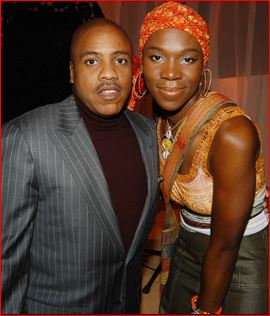
Kedar Massenburg & India Arie

Massenburg felt that Badu’s “new” vinyl direction needed its own launching pad.  He also felt that people needed a label to attach this refreshing brand of music.  You have my permission to underline the word brand. 

The term Neo Soul was (and still is) much more about marketing than the long-standing vibe that has been cemented in culture for centuries.  Nevertheless, history and a few pinned-striped suits will (probably) decide just how long or effective the term will be ignored.

Inside the famed Electric Lady Studio
In 1999, through the early 2000’s, Electric Lady Studios, which is located in Greenwich Village, N.Y., was the storage hub of this bubbling soul music ingredient.  The mythical music studio was the 3-year Incubator that housed the Bag Lady’s majestic masterpiece.  

Oddly enough, there were very loud whispers that, despite the enormous imprint of Mama's Gun, the LP wasn’t even the best dish cooked at the Electric Lady Studios.  As fate would have it, while Badu was rotating your favorite emcee(s); her soon-to-be-Boo, Common was penning one of Hip Hop's strokes of genius, Like Water For Chocolate. The 3-year studio sleepover also included D’Angelo’s sophomore pearl, Voodoo which dropped earlier in the year.  And, not to be undone, the Pre-Fallon Root’s crew completed the cypher, unleashing Things Fall Apart -- all under the same roof at the same time. 


All of the Electric Lady competition didn’t eclipse Maria Mexico from becoming the face of the Neo Soul movement – even though she had plenty of artists worthy of her window seat.  The likes of: Jill Scott, Donnie, India Arie, Ledisi, Jon B., Maxwell, Somi, Jaguar Wright, Le Nubian, Beady Belle, Musiq Soulchild, Angie Stone, Meshell Ndegeocello, Lauryn Hill and Floetry were all smoking the streets as well.  Editor’s note: most of them hated the term Neo Soul – luckily for Kedar the check cleared long before that assessment became commonplace. 

No one detested the term more than Downtown Loretta Brown.  Badu often stated “there is nothing new about soul music.”  She continued: “that term is mainly embraced by lazy thinkers.”  You have my permission to hit subscribe with the "A-Men" button.  The fact of the matter is…, there are thousands of soul singers that built this platform that every black household should have. However, if you are new to this soul mixer, welcome abaard..., Mama’s Gun is the perfect taster.  And, right from the start the head wrapped musical, midwife feeds this starving new Amerykah:

“Penitentiary Philosophy”
Ahmir “QuestLove” Thompson pokes his funky drummer fingertips on the LP’s 6- minute live band opener.  Lyrically the single fits nicely but, the The Bar-Kays-like rhythm was probably best suited for Badu’s follow-up, Worldwide Underground.

“Didn't Cha Know?”
Like great cinema the plot just got thicker.  Didn’t Cha Know had many artists checking the exits, pondering..., would it make more sense to let the dust settle before dropping a project (now) when Mama's Gun still had the street corners smoking?  This bongo-rockin’, drop-your-draws-in-your-jeep vibe is nothing short of breath-taking. It almost seemed criminal that Badu handpicked the prolific producer, J. Dilla to run the point on this one.  And Dilla didn't disappoint—he rarely did.  Jay Dee turned up the soul temperature on this classic.  In fact it was so high that Dilla nearly burned down his freedom. The 4-minute flame was an unauthorized sample of Tarika Blue’s Dreamflower, who naturally sued.  So..., while the two Soulquarian were getting the Mama’s Gun party laoded, the legal party settled out of court.

Erykah Badu & Andre 3k
“My Life”
Badu and Dilla linked right back up, this time they sprinkled-in multi-instrumentalist, James Poyser to compliment this retro 90’s Hip Hop & soul dish. Dilla, apparently learned a valuable legal lesson, as he got his “licensed to ill”—sampling, the Beastie Boys’ joint, Paul Revere.  My Life later became a remix with Common—whom apparently sprung out of the friend zone.  You have my permission to underline sprung.

“Cleva”
The head-nodding party took a very jazzy turn when…, you guessed it…, Team Dilla, Badu, and Poyser summoned the majestic Roy Ayers.   Much of Badu’s work has been neatly wrapped in RAMP’s jazzy blueprinted soul.  RAMP (which is an acronym for “Roy Ayers Music Productions”) was formed by Roy Ayers in 1976 – further underscoring how old Neo Soul is.

“Orange Moon”
This song plays like a movie score.  The Heavenly track is a beautiful ode to Seven, Erykah's first born, with Atlanta’s rapper’s delight, Andre 3000. The metaphors are too numerous to unpack, but the most obvious is Badu, who plays the Moon while her son Seven plays the Sun.  It’s one of the most remarkable singles in Erykah’s catalog. 

Badu & reggae star, Stephen Marley
“In Love With You” feat. Stephen Marley
You may want to tighten the headboard for this one.  The hypnotic, Himalayan-built Badu, curls-up with one of Jamaica’s most noted sperm spreading families and unleashed the dopest duet in both culture’s recent memory.  Stephen’s effortless see-sawing footsie with Badu makes you feel like Andre MUST have been out of town.  This rock-skipping single sways like you are in a satin hammock.  You won’t need the liner notes for this one.  Nah…, this magical 5-minute guitar ride is hugged by a simple melody & an effervescent hook – (only) pausing long enough for you to wonder how long it took them to untangle their hair.  

The organic, analog beat is so spellbinding, you will all but forget when this Soul Session started, the world was about to end & the “new” soul was just getting started.   

1 💓
Ray Lewis


Wednesday, July 01, 2020

SOUL SESSIONS Vol. 7


SEE NO EVIL

This quite frankly may be one of the more extraordinary times of my life.  Not necessarily the marching or protesting or the burning down of corporate-owned retail chains…, that is certainly nothing new.  The historical hypocrisy of the red, white and—mostly especially—the blue isn’t really new either.  America’s duplicity has always been the fabric used to strangle their most marginalized residents.  

What is sort of novel, is the varying levels of discomfort that our white colleagues, peers and (cough, cough) friends have been pondering—some aloud.  George Floyd’s televised lynching has sparked a discourse and (subsequent) movement in the world that hasn’t been seen in a really long time—maybe ever.  And now for once in my life I can almost taste the “hope and change” that was promised by many false prophets—some with the same “colored” masks. We will certainly address that in a future soul session.    

I believe that great art—particularly great music—is birthed out of pain and struggle.  And the best music tends to provide a creative context for the civil and social unrest.  

Therefore, if white people aren’t comfortable tapping a black or brown citizen on the shoulder to help rectify the situation, perhaps they need to pray that these protests won’t pivot from inclusion to retribution.  And if praying to their "Kenny G” doesn’t move the curiosity needle, perhaps picking up an LP that every black household should have will help navigate through these unchartered tête-à-têtes.

For now, let’s turn our clocks back to January 7 B.C. (Before Chris) Dorner.  On this day a black man named Mark Essex went on a vigilante-styled killing spree.  Essex’s murderous rampage included the killing of three police officers during a siege at a Downtown Howard Johnson's in New Orleans. What triggered (no pun intended) Essex’s rage of terror was the Baton Rouge Police Department's lack of accountability of the two black students that were murdered by THEIR police department during a Civil Rights demonstration.  

Mark Essex went full Nat Turner when he started targeting white policemen.  He wanted the police to feel what he was feeling.  He wanted them to see what the consequences were by enforcing laws in a nation with two distinctively different sets of rules.  Essex wanted to retaliate for the police brutality against black people (sound familiar) in America. If you listen really closely you can almost hear Dorner’s golf clap from above.    

Like in 2020, the Essex saga was just the tip of the iceberg of what would become a very stormy year.  In fact, in February the United States dollar was devalued by 10% around the world—perhaps a mere coincidence.   

Then in March, one of the biggest government scandals in history erupted.  In short, a man named James McCord wrote a letter to a judge, admitting that he & co-defendants were pressured to remain silent about the government scandal and cover-up.  The letter revealed that then-U.S. Attorney General, John Mitchell, was the mastermind of the operation.


The slippery state of events paused in April when the very first handheld cellular phone call was made in New York City.  Apparently, someone used those technological advances the following month to dial 9-1-1 to report a lengthy, 71-day standoff, between federal authorities and the American Indian Movement activists that (now) boiled to a feverish pitch.  The activists were forcefully occupying the Pine Ridge Reservation at Wounded Knee, South Dakota.  

They were fighting for the equality that the Native Americans were promised (sound familiar). The physical location of the fight was no coincidence either.  They chose the same location that the 1890 Wounded Knee Massacre took place. It sure sounds like Native American Lives Matters too.

This year limped to the midway point, in June when an arsonist attacked the UpStairs Lounge. The xenophobic act was literally set ablaze at a gay bar in New Orleans' French Quarter and it killed 32 people and injured countless others.

If you stir in an impeachment trial, add a flaming Wendy’s in Atlanta (pardon the pun), and mix in a deadly virus, it would be difficult to tell if we were discussing 2020 or the actual year in review..., 1973.  July is the official start to the 2nd half of the year and obviously no one knows what we’ll see in the near future.

But, if music plays any role in the epilogue, hopefully someone will drop a bomb like one that shook the world on August 3, 1973.     

Stevie Wonder I Innervisions I Tamla Records I August 1973
                         
Stevie Wonder is one of the most magnificent gifts that humanity has ever witnessed.  And nowhere was this more evident than on his Sweet 16th studio LP, Innervisions.  Wonder wrote & produced one of his greatest LPs of all time (which is saying a lot).  Wonder stated that his biggest inspirations came from the social and civil unrest boiling in the 70's.  Stevie rolled up his sleeves to tackle some of Motown’s less radio-friendly topics and unleashed a harmonic musical message about political and social ethics.   And if that wasn’t heavy enough, Wonder spent a good portion of this masterpiece discussing avenues of spirituality and drug abuse.  Every single track is outstanding, so let's unpack a few:
  

Statues of Liberty 


Too High
Right from the start, the needle pokes the platter with a captivating, cautionary tale about the end game of drug abuse.  The song is so painfully graphic that you almost feel guilty bobbin' your dome to it. Underscoring the flat-out brilliant melody is blanketed by a woman trying to cope with life in the 70's through the aid of some really potent weed.  She gets so high from the smoke that after a few puffs…she starts to hallucinate…. ‘It's a crazy scene.’/ that red is green/ and she's a tangerine.” Clearly, she’s already too high.  And before the track ends, her friends have started to spread the news that she unceremoniously passed away. 

Visions
Wonder’s immeasurable lyrics turn from the drug abuse on the opening single to the gospel-enriched Visions.  Here, Wonder pounds the piano pondering whether this land of milk and honey can ever really live up to its promise, or is this just a vision in our minds... (sound familiar). 

Ali & Stevie trade playful jabs

Living For the City
Man….oh….man…. this is how legends are born.

Let’s start with the fact that Stevie performed the lead & background vocals; which would’ve been enough for most artists to retire. Then Wonder’s musical magic added: the piano, the drums, the moog bass and synthesizer to his legendary LinkedIn list of skills.  Even the hand claps on this social commentary anthem belonged to the music icon.   

The song rings of tears from a kid that grew up on the hardships in the Jim Crow south, although he was somewhat protected by his caring circle of people.  He then rolled the dice and moved to the much faster paced north (minus the family circle) and ended up on drugs and doing 10 years in prison.  The music and the lyrics are what soundtracks were built upon.

Wonder added this song to his list of 25 Grammy Awards wins—which ranks him 5th amongst all artists to-date.  I’d be remised if I didn’t mention that Public Enemy used a portion of this song's bridge in their equally classic, Black Steel in the Hour of Chaos.  A far less subtle sample was done on For The Love of Money, which is a rhyming rendition appearing on the New Jack City Soundtrack, by Queen Latifah & Troop.  There has been a number of others to sample this track: Ice Cube, Wu Tang, Usher & Slick Rick, all of whom used this song to underscore their rebelliousness... well, maybe not Usher. 👀  

Stevie Wonder could've added Milli Vanilli to the rest of this LP and it would still be one of the greatest masterpieces of all time.  Failed humor aside, let's keep in mind that the year was 1973, and the political scandal referenced earlier was Watergate.  Therefore, the Motown Great had much more to say—especially on the politically charged...

He's Misstra Know-It-All
The single is a description of a “know-it-all trickster” whom, according to Wonder, is a character who is a "man with a plan..., who has a slick answer to all his critics and who has a counterfeit dollar in his hand." It has been widely speculated that this song is referring to then-U.S. President, Richard “Tricky Dick” Nixon.  Stevie has never confirmed nor denied that assertion.  He took the same position when others insinuated that the song was about Motown's two-faced president, Berry Gordy, who was the P-Diddy of the 70's.

Higher Ground
There are endless antidotes that add to the legend of this amazing song, not the least of which is that Stevie played every instrument on this song as well.  Wonder often speaks on how he wrote and recorded this single in a three-hour stream of consciousness.  Higher Ground is a song about reincarnation—"sometimes while you are on earth,” said Wonder -- who also felt like this song was his second chance at life.

And in an eyry twist of fate, just three days after Innervisions was released, Wonder was involved in a near-fatal car accident that left him in a coma.  There are varying degrees of what actually happened in the car that sunny afternoon.

But the most consistent part is..., about his manager...,who played Higher Ground over & over by Stevie’s bedside, which woke Stevie out of his coma.  If you didn’t know that story before, you will probably never listen to that song the same again…, especially if retribution is the endgame for black lives in America.


1 ❤

Ray Lewis


The Naked Truth

We…, and when I say we, I mean y’all…, are a mere 7 months into Donald Trump’s Spin the Block presidency and as a quick suggestion, you sho...